There are films that tell you voyeurism is wrong. And then there’s Incognito, which quietly places you in the voyeur’s seat before asking whether you’re any different!
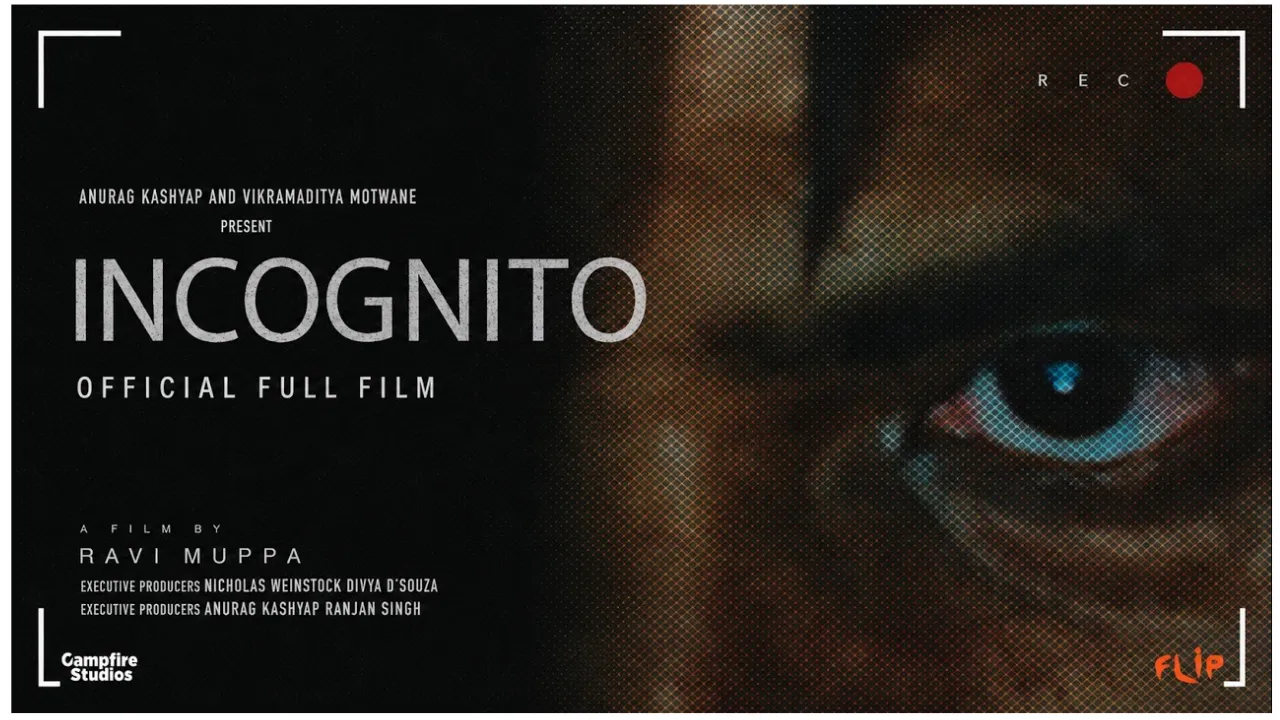
Voyeurism, by definition, is the act of deriving pleasure from secretly watching someone within the limits of their privacy. And “incognito” today has become synonymous with browsing the internet without leaving a trace and believing no one knows what we’re looking at. Written and directed by Ravi Muppa, Incognito takes these two ideas and brings them together in a 25-minute silent short film that isn’t just about voyeurism, but about the people behind the gaze, the people unknowingly caught in it, and the kind of morality we perform when nobody is watching. A film presented by Anurag Kashyap and Vikramaditya Motwane with the launch of their new YouTube channel, Oh Short Flips, curated especially for short films.
It begins with a motel manager secretly recording couples through hidden cameras installed in their rooms and uploading their intimate moments online. But when one of those recordings captures something far more sinister than he bargained for, the film shifts from an invasion of privacy to questions of complicity, masculinity and whether doing one good thing can undo all the harm that came before it.
The film quietly makes you the voyeur too
What makes the film so effective is that it doesn’t simply show you a voyeur, it turns you into one. As the manager (an in control Vikram Singh) sits behind his monitor watching everything unfold through his hidden cameras, you’re watching with him. At first, you’re only observing because the film has placed you there. But as a young woman trapped in what appears to be a trafficking situation comes into the frame, you stop watching out of curiosity and start watching in the hope that someone intervenes. The camera itself becomes part of the storytelling. Just as the manager intrudes into other people’s lives through his hidden cameras, the film almost feels like it’s watching him back, exposing his hypocrisy instead of letting him hide behind the screen.
Silence becomes the film’s loudest voice
There are barely any dialogues in the film. Guests arrive, check into their rooms and go about their business, much like any ordinary motel. But the silence never feels ordinary. Instead, the film leans heavily on its atmospheric sound design. The hum of of the computers, footsteps echoing through empty corridors, doors shutting and a constantly building score slowly raise the tension with every passing minute. The sound does what conversations usually would; it tells you when something is wrong, keeps you on edge and pulls you deeper. By the time manager decides to act, you’re just as anxious to know whether the girl will make it out safely.
It refuses to give you an easy hero
The biggest strength of the film lies in the moral dilemma it leaves you with. The manager decides to help the young woman escape, risking his own safety in the process. It’s an undeniably brave act. But the film refuses to let that single moment erase who he has been all along. He’s still the man who secretly installed hidden cameras, violated people’s privacy and profited from uploading their intimate moments online. In fact, that’s what makes Incognito more than just a thriller. The obvious villain is the trafficker. But the film constantly nudges you towards another uncomfortable thought – is the man secretly exploiting women from behind a screen really all that different just because he isn’t as visibly violent?
One man’s violence is immediate and obvious, while the other’s hides behind anonymity, curiosity and the illusion of being a “good person.” Can someone who has spent so long exploiting others suddenly become a good person because he did the right thing once? Incognito never answers. Instead, as he gets choked by the handler while trying to save the girl, the film leaves you wondering whether you feel sorry for him. And if you do, are morality and redemption really as black and white as we often make them out to be?
It quietly reminds you who the story is really about
For all the attention the manager gets, the emotional centre of the film is the young woman (Ayushi Neema). Every man’s gaze tries to define her as one wants to sell her, another secretly watches her and records her without consent, and even we, as viewers, are watching her ordeal unfold from behind a screen. The tragedy isn’t just what happens to her; it’s that she never gets to exist outside someone else’s gaze. In a film built around hidden cameras, she’s the one who’s looked at the most but seen the least.