
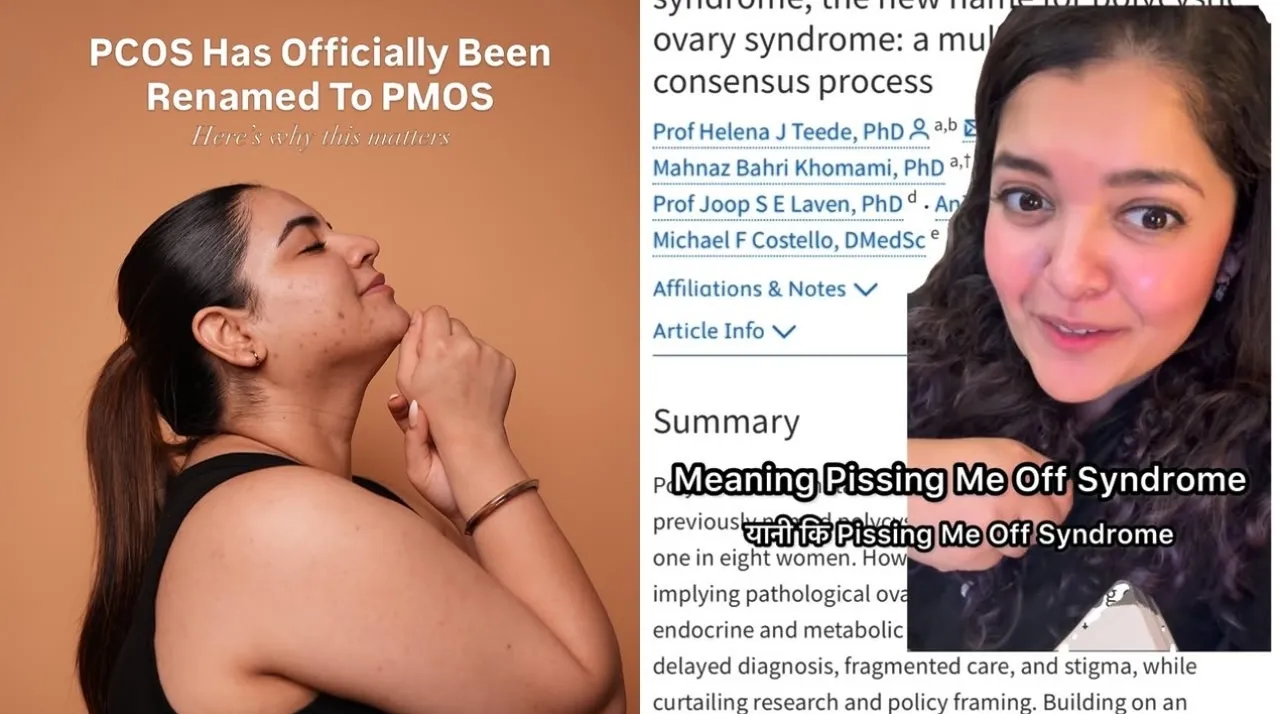
Doctors and creators across Instagram are calling the WHO’s renaming of PCOS to PMOS a long-overdue step towards better understanding women’s health.
Talk about how women often celebrate even the smallest signs of being properly understood in healthcare, and the WHO’s latest move around PCOS is a reminder of exactly that. The World Health Organisation (WHO) has decided to rename Polycystic Ovary Syndrome to Polyendocrine Metabolic Ovarian Syndrome (PMOS). While it may look like just a minor tweak, the change carries much bigger meaning, especially for millions of women whose symptoms and struggles have long been misunderstood.
For years, Polycystic Ovary Syndrome has been described as a hormonal imbalance caused by excess hormone production in the ovaries. But ironically, the name itself has long misunderstood the condition. By focusing on “ovaries” and “cysts,” it created the impression that PCOS was only a reproductive issue, often leading to delayed diagnoses and fragmented care. By announcing the renaming, the organisation noted that the term failed to accurately capture the complexity of the condition, contributing to stigma while also limiting research and policy framing. In reality, the condition affects far more than reproductive health. It is closely tied to metabolic and hormonal functioning, influencing insulin resistance, weight fluctuations, skin health, inflammation, and mental well-being. By introducing the term PMOS, the WHO aims to reflect the condition more accurately and encourage a broader, more informed understanding of women’s health.
The update has also reopened conversations around how women’s health concerns are often misunderstood, oversimplified, or dismissed altogether. For years, many women navigating the condition have spoken about the frustration of delayed diagnoses, endless doctor visits, and advice that frequently stopped at “just lose weight,” without addressing the deeper metabolic and hormonal challenges involved. Following the announcement, several doctors and content creators took to Instagram to talk about why the change feels important. Some even decided to share their reactions on what the news means to them. For many, it is not just about a new name, but about finally acknowledging the complexity of a condition that has long been reduced to incomplete definitions and surface-level conversations.